DEMOS IN SECONDS, NOT HOURS
Sales needed demos at a moment's notice, and I built a solution that got them there.
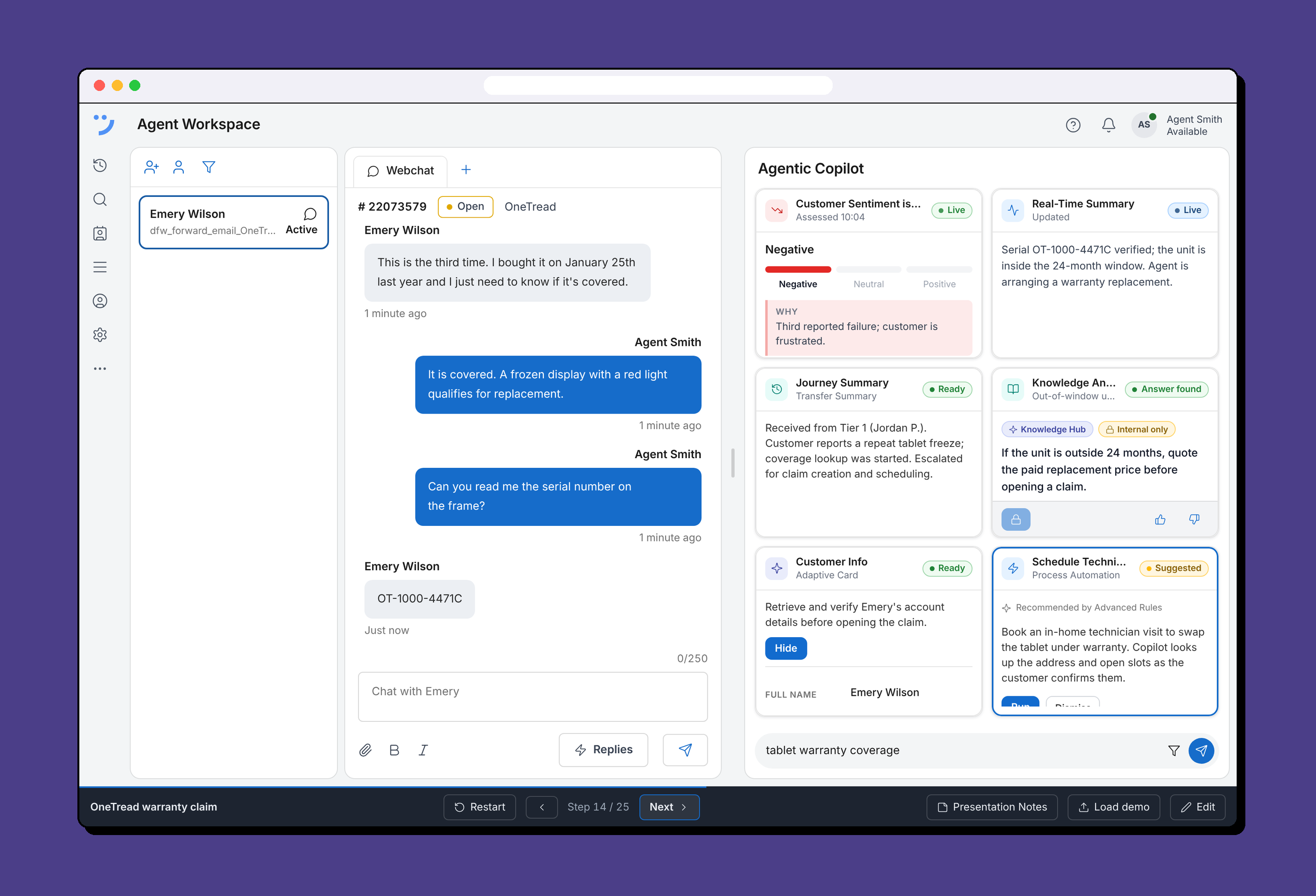
Every demo was waiting on someone.
Our sales reps and solution consultants show Copilot to customers all the time, and honestly, every demo was a bit of a scramble. Teams were making their own mockups in Claude, relying on static images, or waiting for a developer to have time to update the HTML demo.
The requests usually came at a moment's notice too. One time I was asked the day of to make a demo for a prospective client. We had about four hours, so I built it in Figma just so they could record a video in time. It worked, but only because I happened to be free that afternoon.
Around the same time, we were building Claude skills for just about everything. That got me thinking: what if sales could make their own demos, and actually trust them?
The Director of the Agentic Product Team asked me to build it, and I'll admit we had different ideas of what done looked like. For him, it was a JSON file you could load into the demo. For me, it was being able to make changes right then and there, inside the demo itself.
I knew the editor was what would really make reps independent. A file still needs someone who can write it, but an editor just needs someone who knows their customer.
It also took a lot of insider knowledge. I know how the CXone suite connects, which Copilot tiles actually ship and how an agent moves through a conversation, so the demos could be accurate from the very start.
Fast, accurate and true to the product.
- Accuracy first. Demos go in front of customers, so they could only show what the product really does.
- No technical skills required. Reps and solution consultants shouldn't need to touch code to change a demo.
- Every screen. Demos had to work on laptops, big displays and video calls.
- Fit other platforms. Copilot looks different inside each CCaaS product, so the skins had to match how it really appears there.
Demos anyone can build, edit and present.
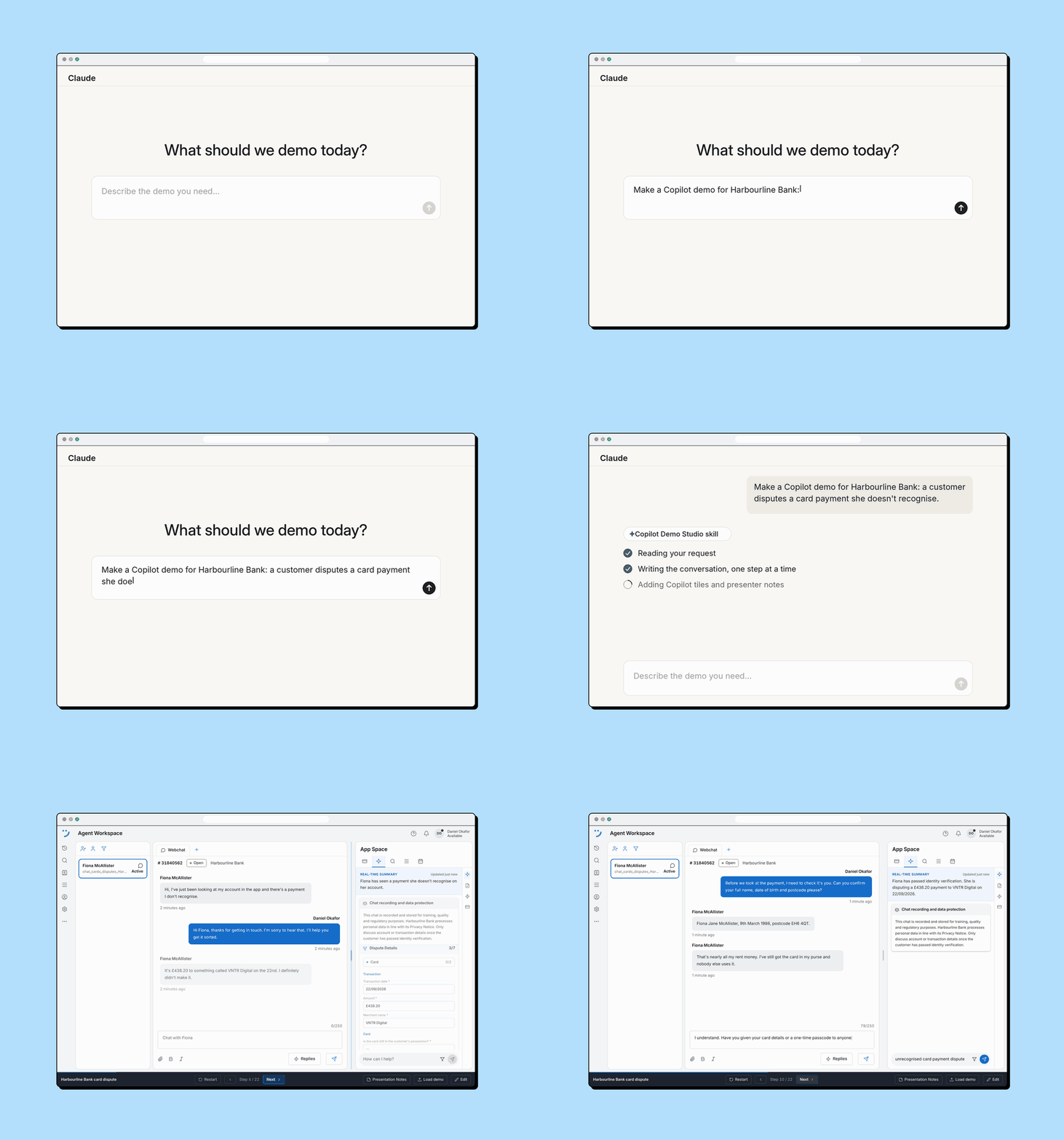
One sentence in, a demo out
I created a Claude skill that turns one sentence, like a bank customer disputes a card payment she doesn't recognise, into a complete demo in about 20 seconds. Something that used to take hours!
I also added an option inside the demo to generate one in the moment from a customer's pain point, so when something comes up mid-meeting, the rep can show exactly what that customer cares about.
The trade-off: I kept the JSON file because that's what done looked like for the Director. Looking back, it really isn't needed. Everything already runs within Claude, so the file just adds a step most people never use.
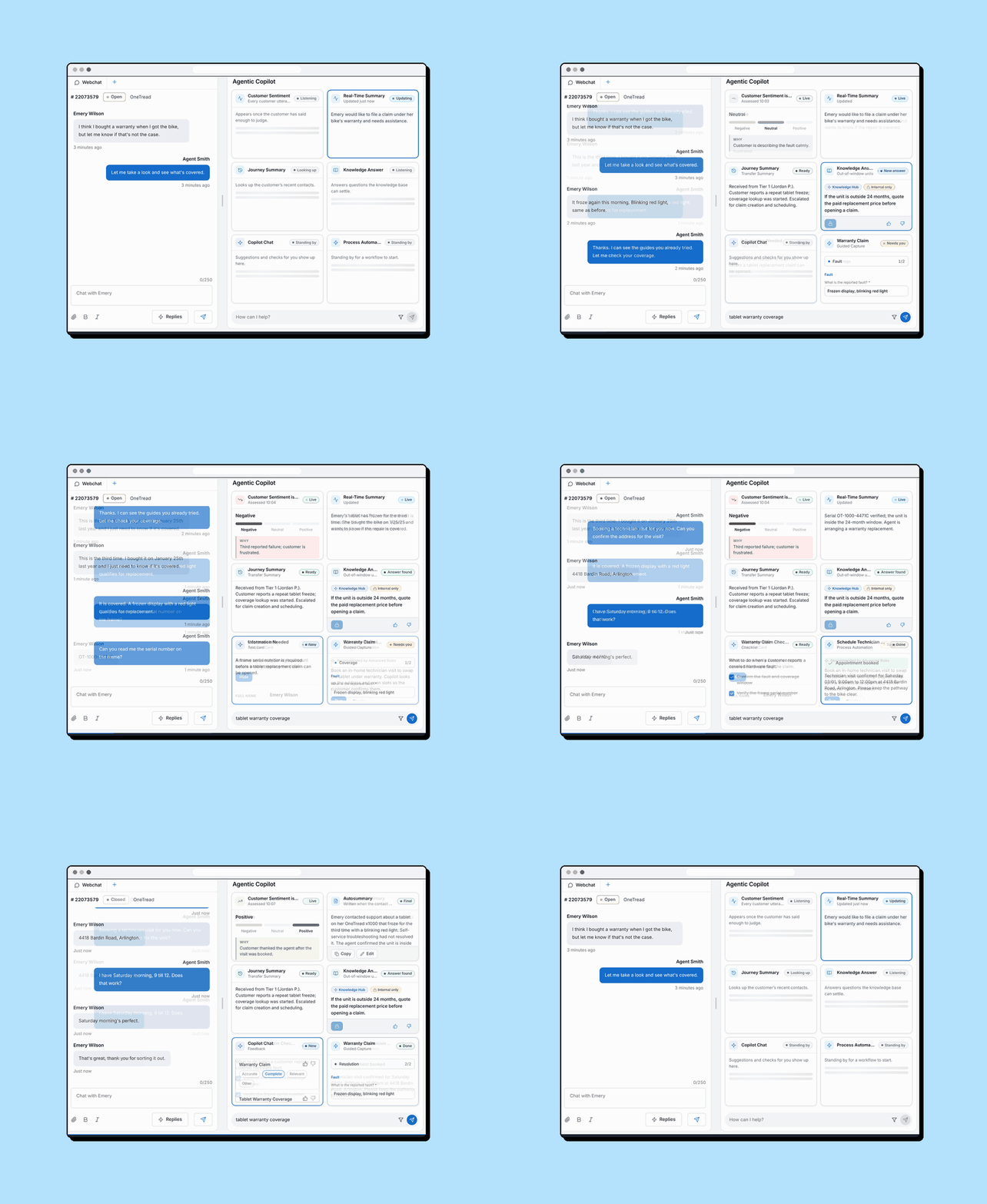
From cluttered to sequential
The first screen the AI generated had a lot going on. There were so many configurations that weren't needed, and it wasn't very intuitive where to change the script or add the right Copilot cards.
So I made it sequential. You can read the script top to bottom, in order, and see exactly which cards surface at what time. Each row is one click of Next.
Nothing was taken away, it can still do everything. The difference is that sales isn't inundated with customization options. Up front, they only get what they usually change, which came straight from our interviews, and the tile gallery only offers Copilot tiles that actually ship.
Anatomy of a demo

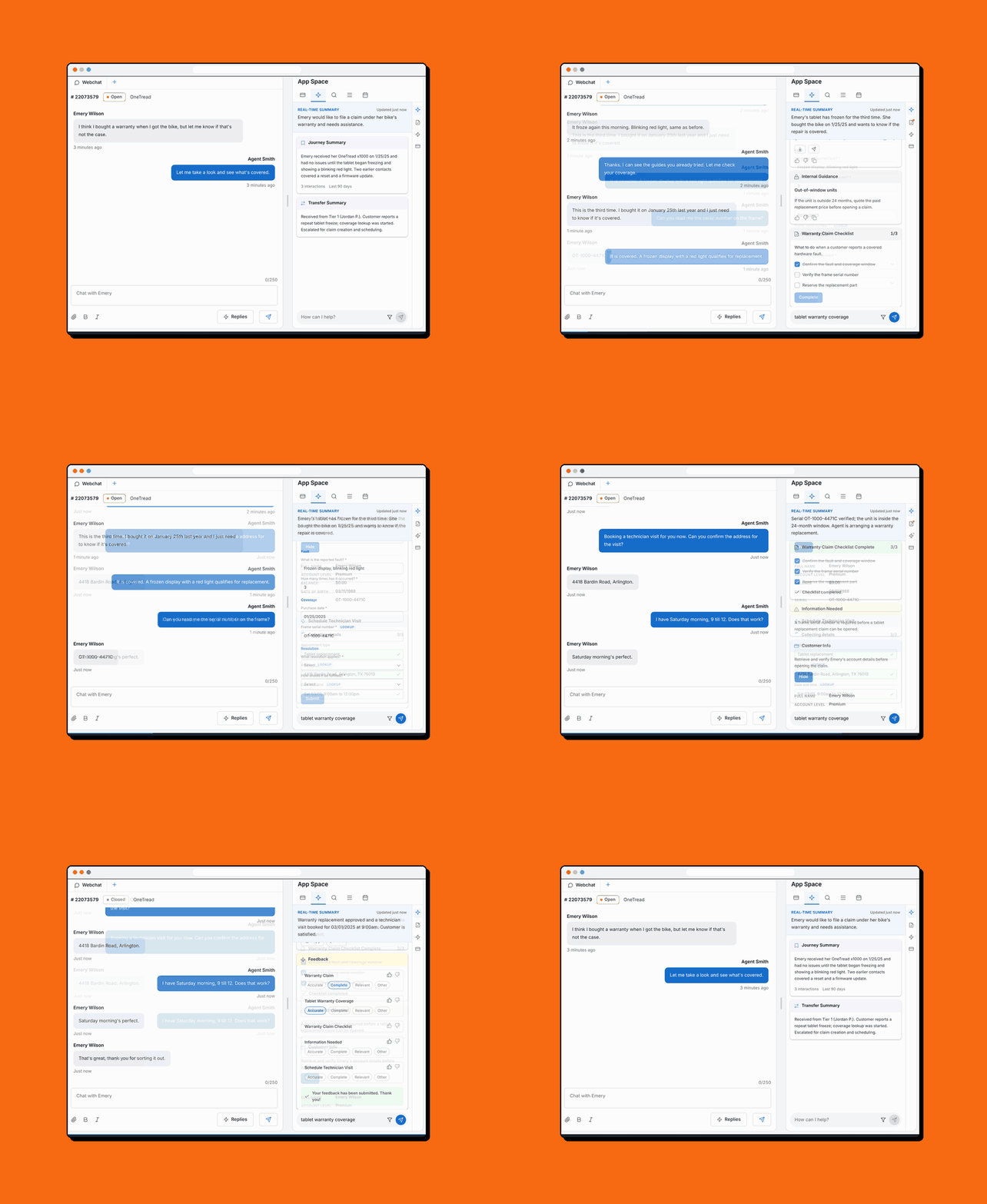
Present anywhere, in any skin
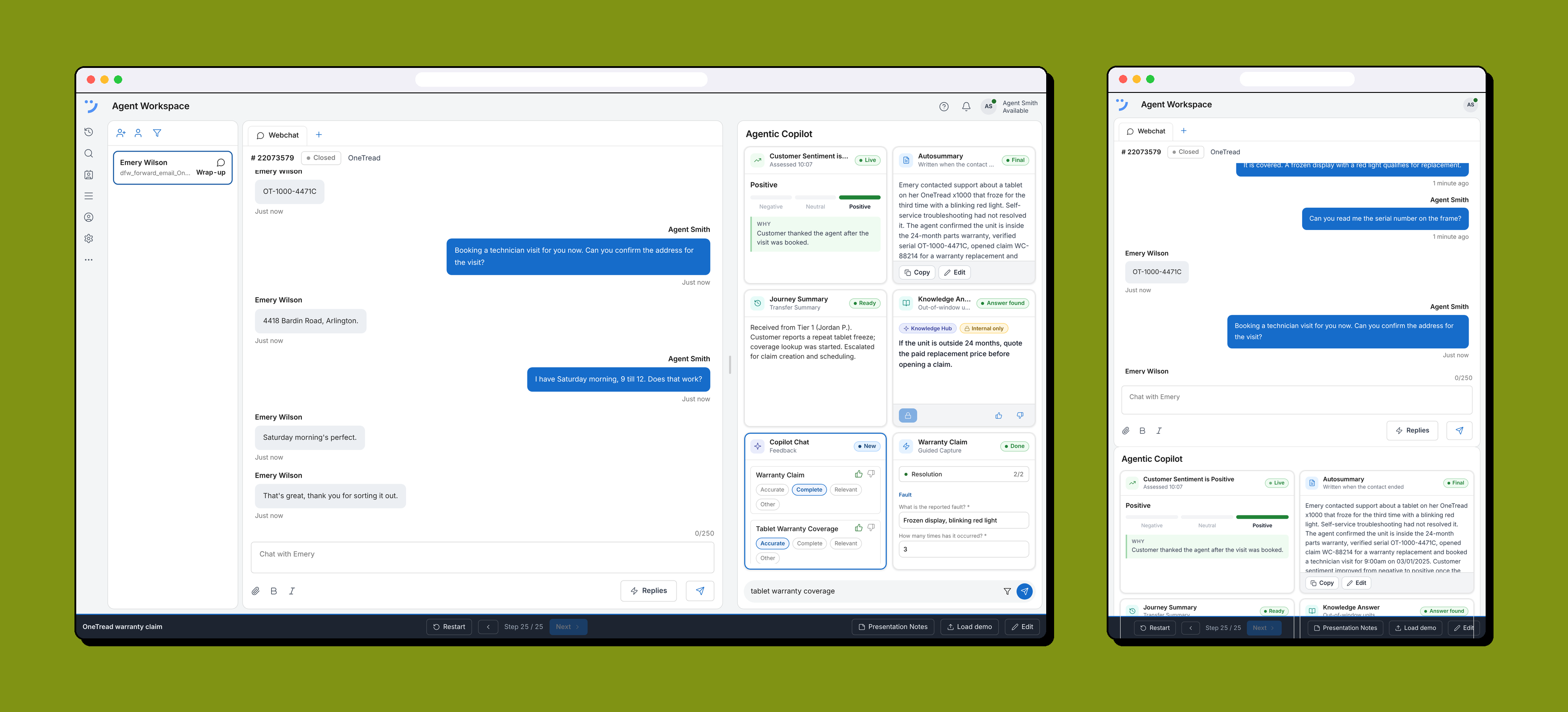
Presenter mode turns the demo into slides that follow the conversation, so presenters can walk through it when they need to and at their own pace. There's a small bar with Restart, Back, Next and a step counter, and every step can have its own presentation notes (just press N).
Copilot and Agentic Copilot are two different products, and presenters can swap between them right in the demo.
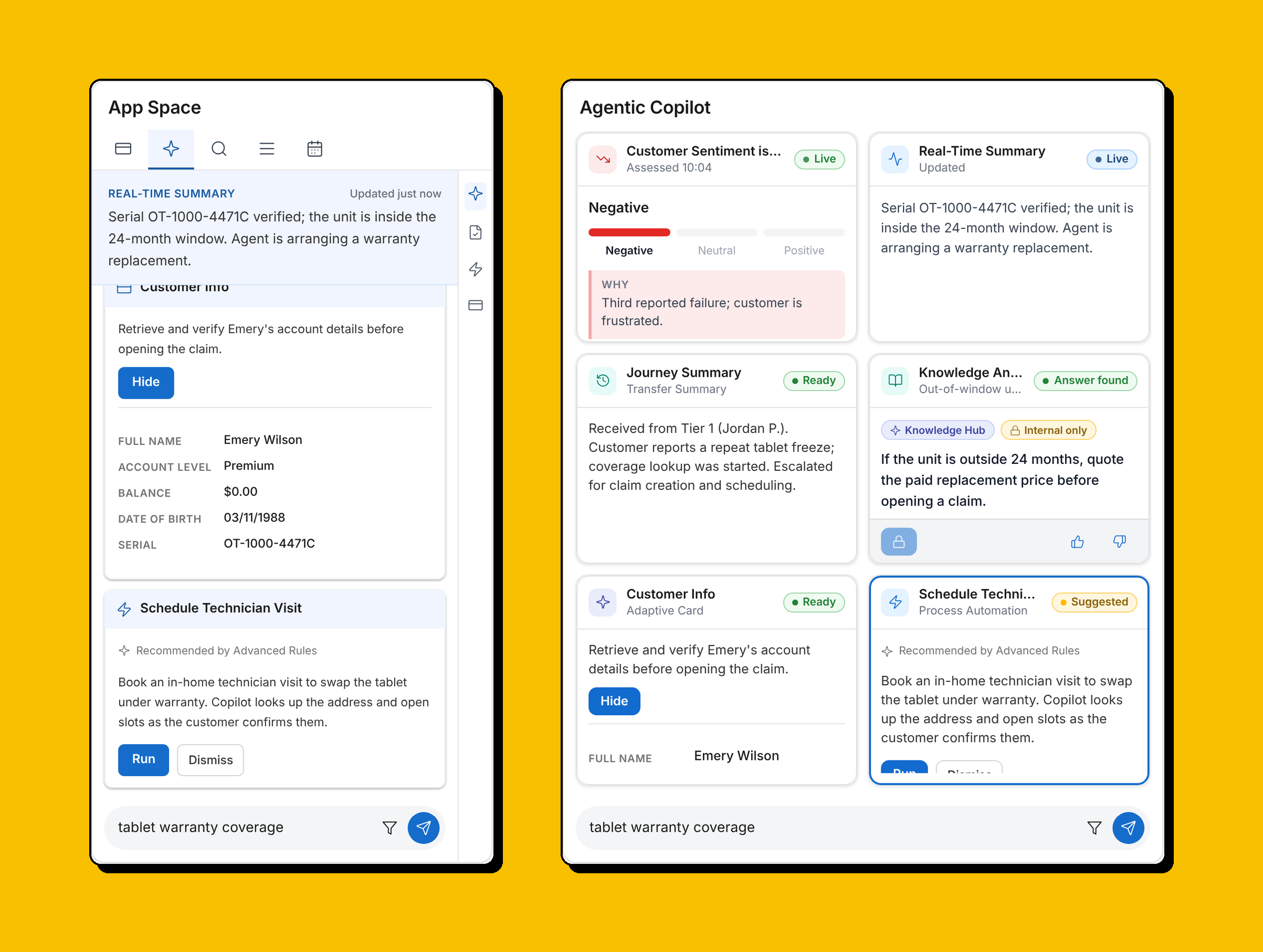
Then I took it a step further. My ask was to look at the different CCaaS platforms and see where we'd fit, which took some research. I had to find out how our Copilot panel would look inside products like Salesforce and ServiceNow, where Copilot comes as a different offering. Being able to switch skins in the moment was my idea, and when I showed it to one of our sales engineers, he suggested putting the switch right on the bottom bar. I later refined it from there.
And since demos happen everywhere, from a big conference room screen to a shared laptop on a video call, the layout adapts to whatever screen it's on.
Demos took hours and depended on whether a designer or developer was free.
A demo in about 20 seconds, editable and presentable by anyone at NICE.
A demo that used to take hours now takes about 20 seconds, and the sales team can create worry-free demos for their presentations without waiting on a designer or developer. It's open to anyone at NICE.
One thing I didn't expect: marketing was part of our first testing group, and they've been using it for screenshots in printed materials, on our website and in slide decks.
It's still early days, but it will likely replace the much more arduous HTML demo.
If I rebuilt it tomorrow, I'd take out the JSON option completely. It's not necessary when everything already runs within Claude, and removing it would make the whole experience even simpler.
